Events Categories
CETANB Centre for Emerging Technology and Atma Nirbhar Bharat
CMHCS Centre for Military History and Conflict Studies
CP&L Centre for Publications & Library
CPME Centre for Professional Military Education
CS3 Centre for Strategic Studies and Simulation
CUNHS Centre for United Nations and Humanitarian Studies
RakshaManthan 2025 | Envisioning Viksit Bharat @2047 through Strategic Dialogue
RAKSHAमन्थन
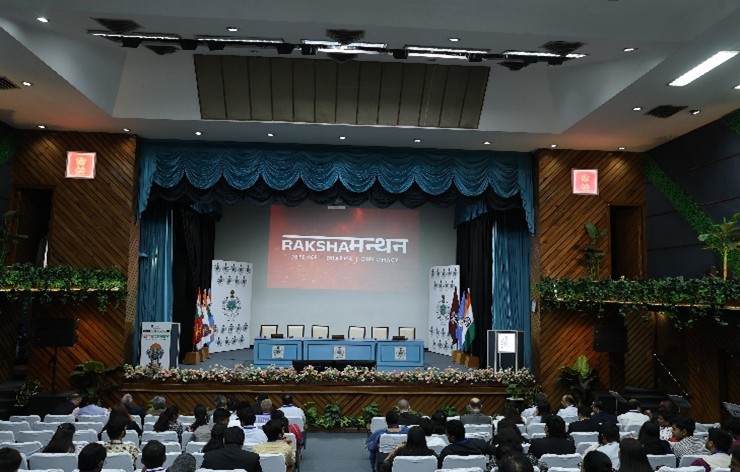
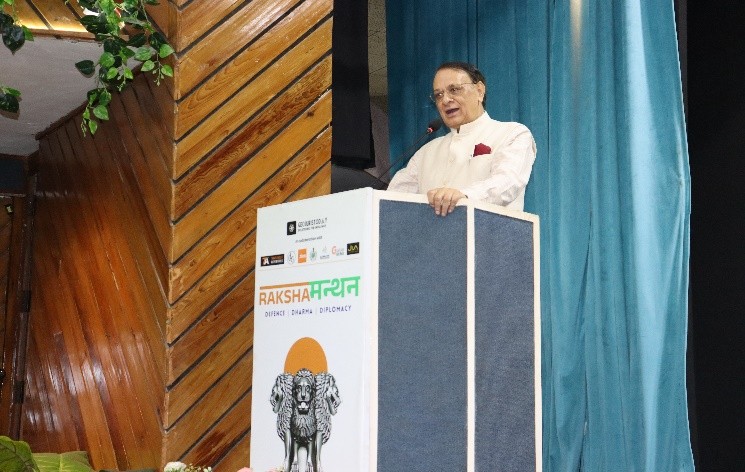
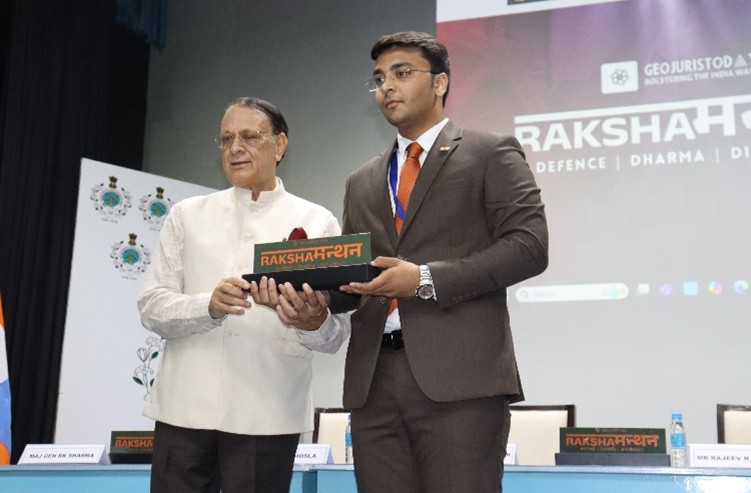
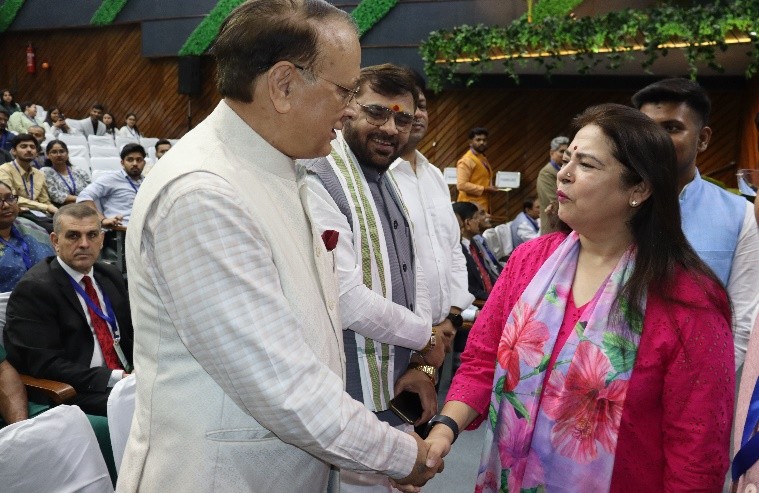
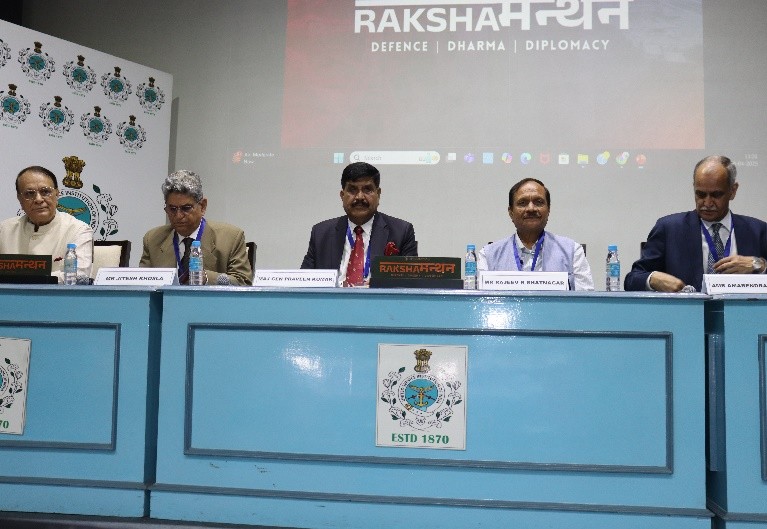
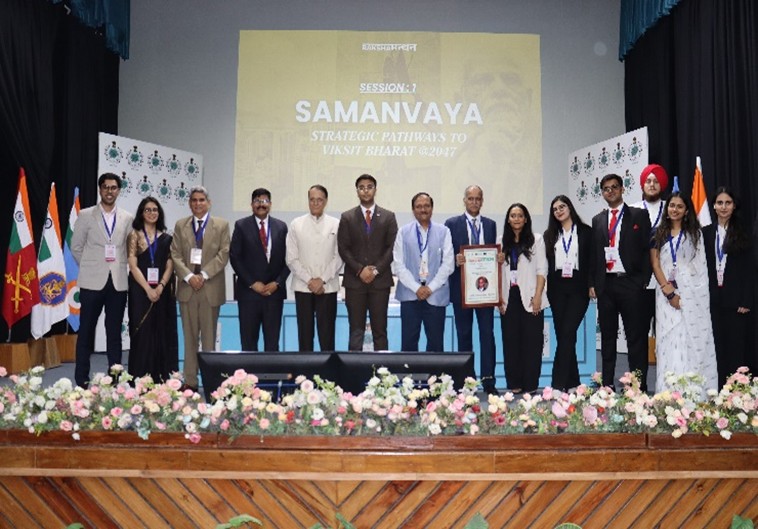
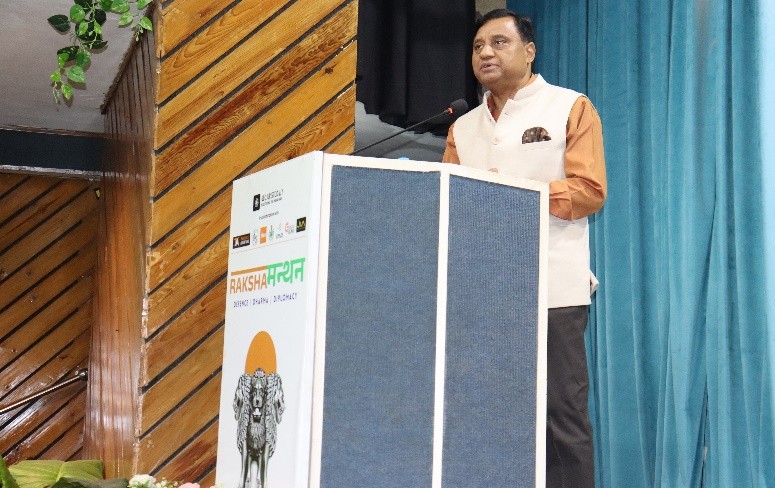
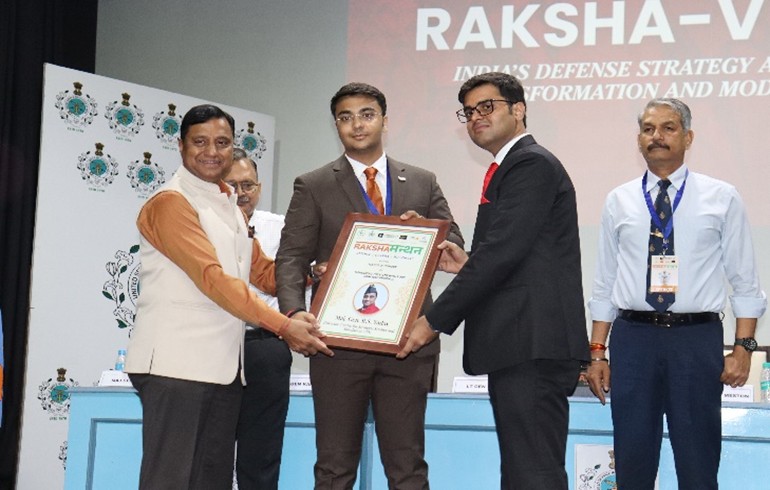
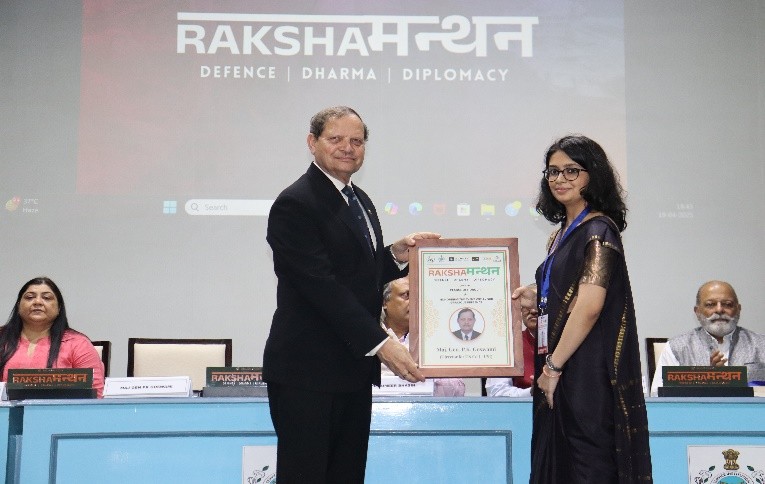
USI, in collaboration with Geo JurisToday, organised ‘RakshaManthan’- A Platform to deliberate on Challenges & Opportunities through the lens of Defence, Dharma, Development and Diplomacy- to realize Viksit Bharat @2047
PROGRAMME
19 April 2025
|
Time |
Session |
Panel |
|
10:00 - 11:00 AM |
KEYNOTE SPEAKERS |
|
|
11:00 AM-12:00 PM |
Samanvaya- Strategic Pathways to Viksit Bharat @ 2047 |
Maj Gen BK Sharma (Moderator) Mr Jitesh Khosla Maj Gen Praveen Kumar Mr Rajeev Rai Bhatnagar Amb Amarendra Kathua Mr Sumeet Bhasin |
|
12:15 - 01:15 PM |
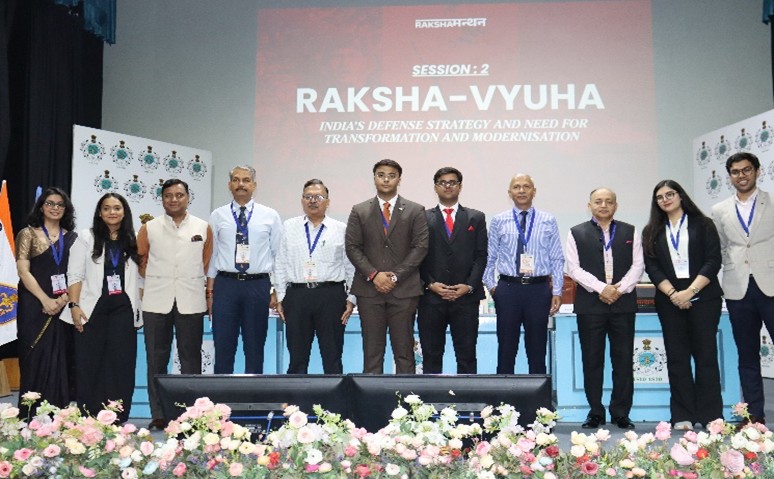
Raksha-Vyuha India’s Defence Strategy and Need for Transformation and Modernisation |
Maj Gen RS Yadav (Moderator) Lt. Gen. D.P. Pandey Vice Admiral Anil Kumar Chawla Lt. Gen. Kapil Agarwal Maj. Gen. Sanjay Meston Air Marshal Rajeev Sachdeva |
|
01:15 - 02:30 PM |
REFRESHMENTS |
|
|
02:30 - 03:30 PM |
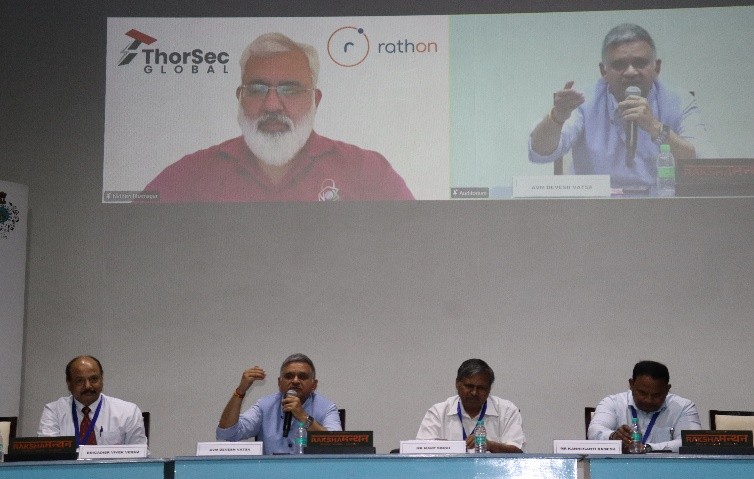
Cyber Dharmachakra Navigating the Digital Battlefield of Modern Warfare |
Maj Gen (Dr) Pawan Anand (Moderator) AVM Devesh Vatsa Mr. Vineet Kumar Mr Pradeep S Mehta Mr. Kanneganti Ramesh Mr. Nidhish Bhatnagar |
|
03:45 – 04:45 PM |
Arthavyuha The Impact of Political Shifts and De-Globalization on Global Trade and Supply Chains |
Amb. K.P. Fabian (Moderator) Dr. Sriparna Pathak Dr.Gitanjali Roy Wing Commander Praful Bakshi Amb. Gurjit Singh Commodore R.S. Vasan |
|
05:00 – 06:00 PM |
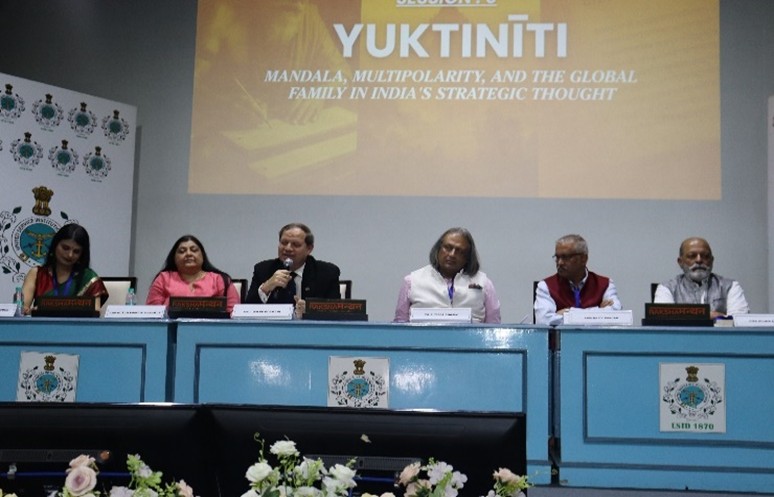
Yuktiniti Mandala, Multipolarity, and the Global Family in India's Strategic Thought |
Prof. Dr. Bharti Chibber (Moderator) Amb Nutan Kapoor Justice Vineet Saran Mr. Sumeet Bhasin Amb. Sujan Chinoy Maj. Gen. P.K. Goswami |
Key Takeaways:
- A call for strategic governance to be reimagined as an integrative, citizen-centric model was made, emphasizing that siloed bureaucratic planning must be replaced by a horizontal framework where coordination among civil, defence, economic, and foreign policy institutions is institutionalized under the ethos of Samanvaya.
- The necessity for India’s defence transformation to be pursued holistically was underlined, where Atma Nirbhar Bharat in defence manufacturing is strengthened through increased R&D investment, indigenous capability development, and the establishment of Integrated Defence Industrial Corridors.
- The Indo-Pacific region was recognized as the key strategic theatre for the 21st century, where India’s maritime capabilities and strategic presence must be enhanced to ensure security, prosperity, and a rules-based order; simultaneously, it was emphasized that the Indian Ocean must be secured as a zone of peace, with maritime infrastructure—both civilian and military—being scaled up under SAGAR (Security and Growth for All in the Region) to counterbalance China’s assertiveness.
- India is actively moving towards securing its digital and technological ecosystems by investing in indigenous capabilities, especially in sectors like semiconductors, AI, and cybersecurity. India is also diversifying its global supply chain dependencies, aligning with trusted partners to reduce strategic vulnerabilities.
- Drawing from philosophies like Yuktiniti (contextual ethics) and Vasudhaiva Kutumbakam (the world is one family), India is framing a value-based foreign policy. These civilizational ideas underpin India’s push for a more inclusive and multipolar world order, where diplomacy and mutual respect shape international engagements.
- India recognizes the waning influence of traditional globalization models and is instead working towards establishing the Indo-Pacific as a regional hub of prosperity and innovation. Through trade, security, and connectivity partnerships, India aims to boost collective resilience across the region.
- The focus is shifting to new frontiers like the blue economy (oceans), space tech, and data governance. India is investing in these sectors not just for economic returns but to ensure strategic autonomy and technological leadership in a rapidly transforming world.
- India advocates for trust-based, human-centric technological ecosystems. This includes formulating AI regulations, ensuring data privacy, and promoting international cooperation to manage digital threats, misinformation, and cyber warfare, making ethics central to innovation.
Report by Elma Naaz, Research Intern, CS3, USI